


Diros Cave: Nature’s Breathtaking Wonder in the Depths of Peloponnese’s Earth

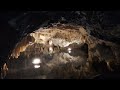
Nested on the western shores of Mani, in the Peloponnese peninsula, the extraordinary sea cave of Diros is a nature’s wonder and one of the three most important of its kind in the world. There, in the depths of the Laconian earth right by the sea, is where nature has for millions of years sculpted an artistic miracle of stalactites and stalagmatites, waterfalls and glistening crystals, which for their most part, visitors marvel by boat slowly gliding over the cave’s waters.
Though by many it is believed to be a cave system due to its structure, Diros is one cave also known as Vlyhada, with its natural entrance only half a meter in diameter and located very close to the sea surface. In earlier times, researchers have determined that there were other entrances to the cave that gradually closed. The known part of the cave covers an area of about 33,000 square meters, of which only half has been explored.
Only about 200 meters away is also the neighboring cave of Alepotrypa, which was inhabited by humans during the Neolithic period and the nearby cave of Katafygi.
Shrouded in ancient myths, that the cave once was the entrance to the underworld, modern-day research suggest that the formation of the cave, which is mostly located under the water’s surface, began millions of years ago. The stalactites (structures hanging from the roof of a cave) and stalagmites (a column rising from the floor of a cave) that are now under water were formed when the sea surface was much lower than its current level. Stalactites have been found at a depth of 71 meters, with the maximum depth of the cave being outside the visitors route, at 80 meter.

The ornamental features in the cave are literally created drop by drop as the water that penetrates the cracks in the limestone dissolves. Over a long period of time, the precipitate of dissolved calcium carbonate forms the stalactites and stalagmites, creating some stunning formations at Diros, such as the “Mandyas of Poseidon” (Cloak of Poseidon in the first gallery), “Thalassa ton Navagion” (Sea of Shipwrecks), and “Petrinos Krinos” (Stone Lilly).
The visitors route of Greece’s most famous cave is 1,500 meters in length of which the first 1,200 are traversed by boat while the remaining 300 by foot.
Diros Cave is also marveled for its amazing acoustics. In 1971, Greece’s National Tourism Organization invited French composer Pierre Arnaud to record inside the cave, an initiative that resulted in the release of an album called “Music from the Caves of Diros,” also including recordings from the Alepotrypa cave.
The explored section of the cave is estimated to exceed 15 kilometers and the water at the most part of the section open to visitors is brackish. The temperature inside the cave ranges from 16-19 degrees Celsius while the water has a temperature of 14 degrees.
The history of Diros Cave, nature’s wonder under the earth of the Peloponnese
Excavation work inside the cave has led to the discovery of fossilized bones of lions, panthers, hyenas and hippopotamuses (the largest deposit in Europe), providing a glimpse on the impressive fauna that inhabited the area about two million years ago, when the cave was entirely on land.
Ceramics have also been found near the natural entrance to the cave, suggesting a human presence.
Abandoned as human habitation at 4th century BC because of an earthquake, the cave wasn’t rediscovered by humans around 1895. While locals knew about its existence, it wasn’t until 1949 when the founders of the Hellenic Speleological Society, Yiannis and Anna Petrocheilou, began its systematic exploration.

With no one suspecting the miracle hiding inside the cave, by 1960 1,600 meters had already been explored and mapped. In the late 1980s, the Ministry of Culture’s Ephorate of Paleoanthropology-Speleology began a detailed study of the cave and in collaboration with an international group of cave divers continue its exploration and mapping to this day.
As Diros Cave awaits for more of its secrets to be revealed, it is regarded as one of the world’s most impressive caves in its category, along with Lebanon’s Jeita Grotto in Beirut and Le Gouffre de Padirac in Gamat, France.
Business News



No comments