


Greece Grounds All Flights After Athens FIR Technical Failure
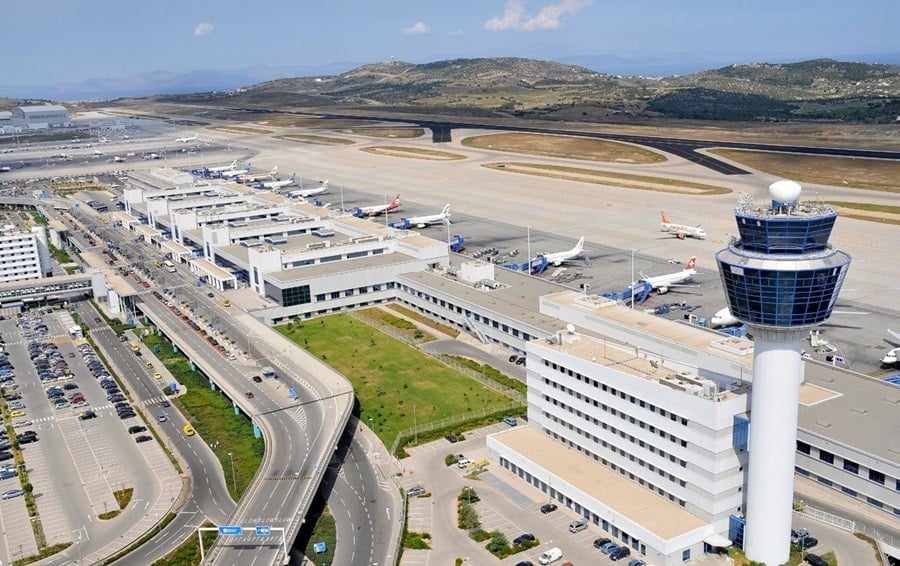
A major technical failure in Greece’s air traffic control system triggered a sudden crisis in the nation’s skies on Sunday, January 4, grounding flights and leaving thousands of travelers in limbo.
The problem stemmed from a malfunction in the communication systems used by controllers in the Athens Flight Information Region (FIR), making it impossible to safely coordinate takeoffs and landings. With key radio frequencies down, Greek authorities made the difficult decision to halt all departures and arrivals, essentially shutting down air travel across the country and beyond.
Cancellation of Flights Brings Chaos at Greece’s Main Airport and Beyond
The impact was felt most sharply at Athens International Airport, where passengers gathered early in the morning only to discover flights were being delayed indefinitely or outright cancelled. Airlines and airport staff struggled to manage the unfolding chaos, scrambling to rebook travelers and provide updates as waiting halls filled and frustration grew. Planes already en route were handled under emergency procedures and allowed to land safely, but new departures were suspended, and some international flights were diverted to alternate airports.
The disruption at Athens rippled across the broader Greek aviation network because the Athens FIR covers a vast swath of airspace over the Aegean Sea and key international routes linking Europe with the Middle East and North Africa. As a result, closing the FIR effectively froze flight operations nationwide, catching travelers and airline operations off guard.
Passenger Strain and Operational Struggles
Inside terminals, scenes of confusion and long queues quickly emerged as thousands of passengers faced uncertainty about their travel plans. With limited information available in the early stages, many struggled to find clarity on when — or if — their flights would proceed. Airlines worked to issue refunds or alternative bookings, but the scale of disruption made quick resolutions difficult.
Holidaymakers, business travelers, and families alike found themselves stranded, with airport staff and airline representatives under pressure to respond to a growing wave of inquiries. The situation raised concerns not only about immediate inconvenience but also about broader economic impacts, particularly on Greece’s tourism sector, which relies heavily on reliable air travel even in winter months.
Root Cause: Communication Systems Failure
Aviation officials pointed to a core failure in the radio communication systems within the Air Traffic Control Centers responsible for the Athens and Macedonia regions. These systems are critical for maintaining continuous communication between pilots and air traffic controllers, providing essential instructions that ensure aircraft remain safely spaced and navigated through busy skies. Without these communication links functioning properly, officials concluded that continuing regular operations would pose an unacceptable safety risk.
The malfunction underscored how modern aviation depends on complex, interconnected technologies, and how a breakdown in a single component can have outsized consequences for flight safety and operational flow.
Restoration Efforts and Gradual Recovery
Immediately after the grounding, technical teams were dispatched to diagnose and fix the underlying issue. Officials worked around the clock to restore the affected systems, testing components carefully to ensure they met safety and reliability standards before gradually reopening airspace.
As repairs progressed, authorities announced that normal operations were expected to resume once the technical problem was resolved and verified. Flights were slated to restart in phases, prioritizing safety above all else, with the hope of returning Greek airports to regular schedules within a matter of hours.
The incident served as a stark reminder of the fragility of air traffic infrastructure and the massive ripple effects that can occur when essential systems falter. For thousands of travelers, the disruption was an unexpected detour in their plans. For aviation officials and airlines, it was a test of crisis management, technical skill, and the resilience of an industry that must balance precision with unpredictability.
Business News



No comments